
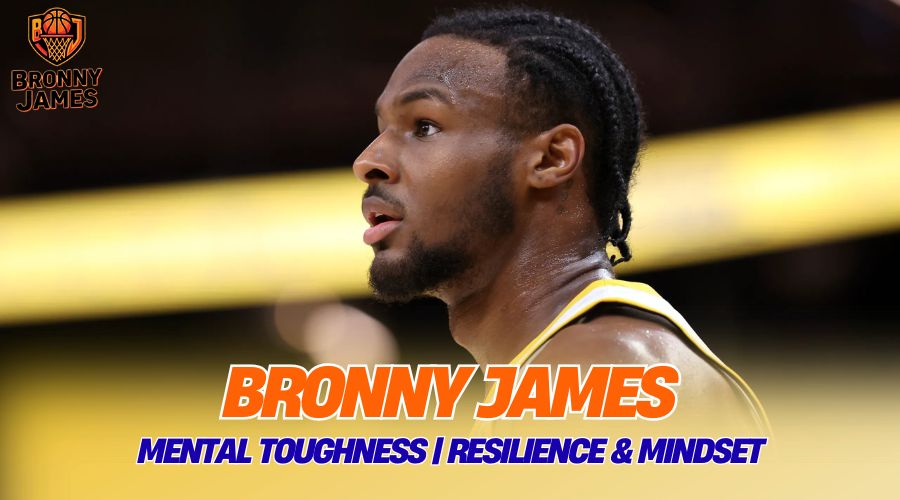
Bronny James mental toughness is often discussed, but rarely defined with clarity. In a sports culture that tends to equate toughness with bravado or emotional intensity, Bronny represents a quieter, more sustainable form of psychological strength. His mental toughness is not expressed through confrontation or spectacle, but through consistency, restraint, and adaptability under constant scrutiny.
Understanding Bronny James mental toughness requires examining how he responds to pressure, absorbs feedback, and maintains competitive focus in environments shaped by expectation rather than anonymity.
Defining Mental Toughness in Bronny James’ Context
Mental toughness does not exist in isolation. For Bronny James, it is shaped by environment, upbringing, and long-term exposure to elite performance standards.
Before examining behaviors, it is important to clarify what mental toughness means in his specific context.
Mental Toughness Beyond Emotional Intensity
In Bronny’s case, mental toughness is not defined by visible emotion or verbal assertiveness. Instead, it appears in composure, patience, and controlled responses to adversity.
This form of toughness emphasizes regulation rather than reaction. It allows performance to remain stable even when circumstances fluctuate.

Sustained Focus Under Continuous Evaluation
Bronny has rarely competed without being observed, evaluated, and compared. Mental toughness in this environment means sustaining focus despite constant external interpretation.
Rather than disengaging or overcompensating, Bronny maintains a steady approach—an indicator of internal resilience rather than performative toughness.
Early Conditioning of Mental Toughness
Mental toughness is rarely developed spontaneously. In Bronny James’ case, early conditioning played a significant role in shaping psychological resilience.
His environment emphasized normalization over dramatization.
Growing Up With Pressure as a Constant
From a young age, Bronny experienced attention as a baseline condition rather than an event. This early exposure reduced the novelty of scrutiny, preventing pressure from becoming destabilizing.
When pressure is normalized, it becomes manageable. This early adjustment is foundational to Bronny’s mental toughness.
Structure as Psychological Stability
Routine, accountability, and clear expectations provided Bronny with psychological anchors. Structure reduced uncertainty—one of the primary drivers of stress.
This stability allowed mental energy to be directed toward learning and execution rather than emotional management.

Mental Toughness in Competitive Environments
Competition amplifies psychological demands. Bronny James mental toughness becomes most visible not in dominance, but in how he operates within demanding systems.
His behaviors reveal resilience rooted in discipline.
Role Acceptance Without Identity Loss
Accepting limited or evolving roles requires mental strength. Bronny’s willingness to contribute without controlling outcomes reflects confidence rooted in preparation rather than validation.
This mindset prevents frustration and supports adaptability—key components of mental toughness at higher levels.
Composure During High-Stakes Moments
Whether facing reduced minutes, defensive assignments, or late-game situations, Bronny’s composure remains consistent. He does not escalate emotionally in response to adversity.
This composure reflects an ability to stay process-oriented when stakes rise.
Handling Setbacks and Developmental Plateaus
Mental toughness is often revealed during stagnation rather than success. For Bronny James, periods of limited visibility or statistical output have tested resilience.
His response to these moments offers insight into sustainable toughness.
Responding to Criticism Without Overreaction
Public criticism has been a recurring element of Bronny’s career. Rather than responding defensively or withdrawing, he maintains engagement and focus.
This response suggests an ability to separate critique from self-worth—an essential psychological skill.
Maintaining Effort During Uncertainty
Development is rarely linear. Bronny’s mental toughness is evident in his ability to maintain effort and discipline during periods without immediate reward.
Consistency during uncertainty is a hallmark of durable competitors.
Cognitive Aspects of Mental Toughness
Mental toughness extends beyond emotion into cognition. How an athlete processes information, makes decisions, and adapts under pressure reflects psychological strength.
Bronny’s cognitive approach supports his resilience.
Decision-Making Under Stress
Bronny demonstrates controlled decision-making even when pressured. He avoids forcing outcomes, prioritizing correct reads over urgency.
This cognitive restraint reduces error rates and stabilizes performance.
Learning Orientation Over Outcome Obsession
Rather than fixating on results, Bronny approaches competition as a learning process. Film study, feedback, and incremental improvement guide his focus.
This orientation supports long-term growth and reduces performance anxiety.
Emotional Regulation as a Competitive Asset
Emotional regulation is a core component of Bronny James mental toughness. Rather than suppressing emotion, he channels it constructively.
This regulation enhances reliability.
Managing Frustration and Momentum Shifts
Basketball is defined by momentum changes. Bronny’s ability to remain composed during swings prevents emotional spirals that undermine performance.
This steadiness supports team cohesion.
Consistency in Body Language and Presence
Body language communicates mental state. Bronny’s consistent demeanor projects control and readiness, reinforcing trust from coaches and teammates.
Such presence reflects internal regulation rather than surface calm.

Support Systems and Reinforcement of Mental Toughness
Mental toughness is reinforced through environment. Bronny James’ resilience reflects coordinated support rather than isolated effort.
Understanding this system clarifies sustainability.
Family Influence and Perspective
Family guidance reinforces balance and perspective. Performance is contextualized within broader personal development, reducing identity overinvestment.
This perspective buffers emotional stress.
Coaching Structure and Clear Expectations
Clear roles and feedback reduce ambiguity—a major psychological stressor. Structured coaching environments support mental toughness by clarifying success criteria.
This clarity allows focus to remain on controllable factors.

Mental Toughness and Professional Readiness
As Bronny James progresses toward professional environments, mental toughness becomes increasingly valuable. Professional basketball demands psychological endurance as much as physical ability.
Bronny’s profile suggests readiness for this reality.
His resilience supports adaptation to changing roles, increased scrutiny, and long-term competition cycles.
Public Misinterpretation of Mental Toughness
Mental toughness is often misinterpreted as aggression or dominance. Bronny James’ version challenges this assumption.
Understanding this distinction reframes evaluation.
Quiet Resilience Versus Performative Toughness
Bronny’s toughness is understated. It manifests through preparation, consistency, and restraint rather than confrontation.
This form of toughness often sustains longer careers.
Why Mental Toughness Is Sometimes Overlooked
Because it lacks spectacle, mental toughness can be undervalued. However, within elite environments, it is recognized as essential.
Bronny’s approach aligns with this professional understanding.
Conclusion: Mental Toughness Built for Longevity
Bronny James mental toughness reflects a disciplined, adaptive approach shaped by environment, structure, and sustained exposure to pressure. Rather than resisting challenge, he integrates it into routine.
This form of resilience does not seek attention. It supports growth, stability, and long-term competitiveness.
In a landscape where psychological overload often undermines development, Bronny James mental toughness offers a model built on regulation, perspective, and quiet strength.
For deeper insight into how psychological discipline shapes his journey, visit our Mental Strength hub.
