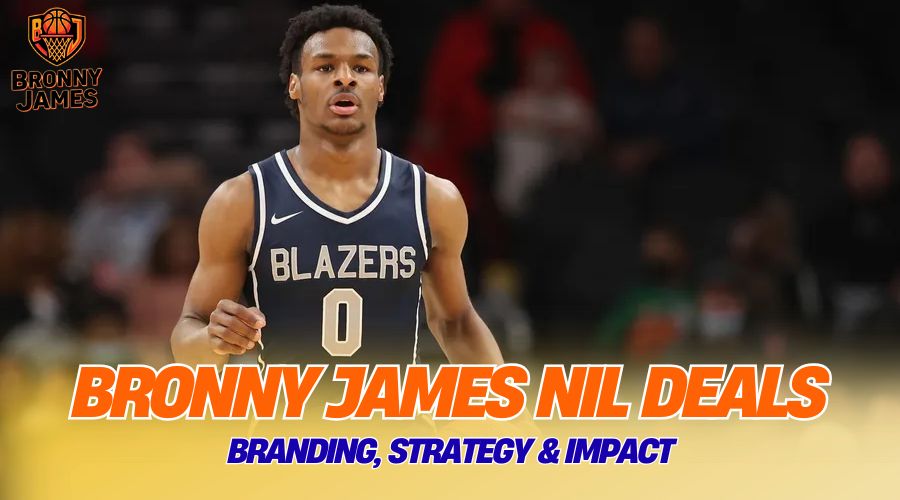
Bronny James NIL deals sit at the intersection of modern college athletics, media economics, and personal brand management. As one of the most recognizable names in college basketball, Bronny entered the NIL era with unprecedented visibility – but how that visibility has been managed reveals far more than headline figures or endorsement logos.
Rather than serving as a case study in excess, Bronny James NIL deals reflect a measured approach shaped by long-term thinking, brand alignment, and reputation management. Understanding these deals requires examining context, intent, and restraint as much as financial opportunity.
Entering the NIL Era With Unmatched Visibility
The introduction of Name, Image, and Likeness rights transformed college athletics, allowing players to monetize their personal brands legally. Few athletes entered this era with more recognition than Bronny James.
However, visibility alone does not define NIL strategy.
Why Bronny James Became a Central NIL Figure
Before playing a single college game, Bronny already possessed national recognition due to family legacy, social media presence, and youth basketball exposure. This positioned him as a high-value NIL athlete from the outset.
Brands viewed Bronny not simply as a college player, but as a long-term cultural figure. His NIL value reflected awareness, reach, and association rather than on-court production alone.
Separating Name Recognition From Brand Strategy
Despite widespread attention, Bronny’s NIL approach avoided saturation. Rather than signing numerous short-term deals, his partnerships appeared selective and deliberate.
This distinction highlights an important aspect of NIL economics: brand longevity often outweighs immediate volume.
Types of NIL Deals Associated With Bronny James
Bronny James NIL deals span several categories common in modern athlete branding. However, the structure and tone of these partnerships reveal a preference for credibility over novelty.
Understanding these deal types provides insight into his broader strategy.
Apparel and Lifestyle Partnerships
One of the most visible categories in Bronny’s NIL portfolio involves apparel and lifestyle brands. These partnerships align naturally with his public image and long-term association with sports culture.
Rather than promotional-heavy campaigns, these collaborations emphasize alignment and consistency – factors critical to brand trust.
Media and Digital Presence Agreements
Bronny’s digital reach makes him an attractive figure for media-related NIL opportunities. His social media platforms offer access to a large, engaged audience without requiring constant personal commentary.
Importantly, his digital presence remains restrained. Posts are infrequent, controlled, and aligned with broader image goals – suggesting that visibility is being preserved rather than maximized.
Strategic Restraint in NIL Participation
One of the defining characteristics of Bronny James NIL deals is restraint. In a market where many athletes pursue rapid monetization, his approach appears intentionally conservative.
This restraint reflects awareness of long-term brand risk.
Avoiding Overexposure in a Crowded Market
Overexposure is a growing concern in NIL-era branding. Athletes who attach their image to too many products risk dilution and audience fatigue.
Bronny’s limited deal volume reduces this risk. Each partnership maintains clarity, allowing audiences to associate his name with quality rather than ubiquity.
Maintaining Athletic Identity Over Commercial Identity
Another notable aspect of Bronny’s NIL strategy is the preservation of athletic identity. His brand remains centered on development and competition rather than lifestyle promotion alone.
This balance supports credibility within basketball circles – an important factor for long-term professional evaluation.
The Role of Guidance and Management
NIL success rarely occurs in isolation. Bronny James NIL deals reflect structured guidance and professional oversight rather than impulsive decision-making.
Understanding this support system helps explain the consistency of his public image.
Family Influence and Brand Protection
Family influence plays a role in Bronny’s NIL strategy. Having access to firsthand experience with athlete branding at the highest level provides perspective on potential pitfalls.
This influence encourages caution, ensuring that deals support rather than overshadow athletic development.
Professional Representation and Long-Term Planning
Professional advisors help evaluate partnership fit, contract terms, and reputational impact. This layer of management allows NIL opportunities to be assessed within a broader career framework.
Rather than chasing trends, decisions appear aligned with long-term positioning.
Public Perception of Bronny James NIL deals
Public reaction to Bronny’s NIL deals has been mixed, often shaped by misunderstanding of NIL economics and development timelines.
Separating perception from reality is essential.
Criticism, Curiosity, and Comparison
Some critics argue that Bronny’s NIL value exceeds his on-court résumé. However, NIL markets operate on attention and reach – not solely performance metrics.
Others view his deals as inevitable given his visibility. Both perspectives overlook the strategic element of brand management.
Why NIL Value Does Not Equal Basketball Projection
NIL valuation does not predict athletic ceiling. It reflects market dynamics, audience engagement, and brand compatibility.
Bronny’s NIL success does not define his basketball future – it exists alongside it.
NIL Deals and Their Impact on Player Development
A common concern in NIL discussions is whether commercial activity distracts from development. In Bronny James’ case, evidence suggests minimal disruption.
This outcome is closely tied to structure and restraint.
Time Management and Focus
Limited deal volume reduces time demands. Appearances, content creation, and promotional obligations remain manageable, allowing training and recovery to remain priorities.
This balance protects development momentum.
Mental Load and Performance Pressure
High-profile NIL athletes often face additional pressure to perform. Bronny’s controlled approach appears to mitigate this effect, preventing commercial expectations from dominating athletic focus.
Bronny James NIL Deals in the Broader NIL Landscape
Within the broader NIL ecosystem, Bronny James represents a unique case study – one defined by visibility, restraint, and long-term thinking.
His approach contrasts with both high-volume endorsement strategies and minimal participation models.
Setting a Precedent for Legacy Athletes
As a legacy athlete, Bronny’s NIL decisions carry symbolic weight. His restraint demonstrates that legacy does not require excess to be effective.
This model may influence how future high-profile athletes approach NIL opportunities.
NIL as a Complement, Not a Centerpiece
In Bronny’s case, NIL functions as a complement to development rather than a centerpiece. This framing aligns NIL activity with sustainability rather than distraction.
How NIL Fits Into Bronny James’ Long-Term Career Outlook
Looking forward, NIL deals are likely to evolve alongside Bronny’s career. As roles, responsibilities, and visibility change, so too will brand opportunities.
The foundation built through early restraint provides flexibility.
Rather than closing doors, his current approach preserves optionality – allowing future partnerships to align with professional milestones.
Conclusion: NIL Deals Built on Strategy, Not Noise
Bronny James NIL deals reflect a disciplined approach to modern athlete branding. Rather than maximizing immediate revenue or visibility, his strategy emphasizes alignment, restraint, and long-term reputation.
In an NIL landscape defined by rapid change and experimentation, Bronny’s approach stands out for its intentionality. His NIL journey underscores a broader lesson: sustainable brand value is built through consistency, credibility, and patience.
You can find more context around branding, exposure, and market dynamics in our Media section.
