
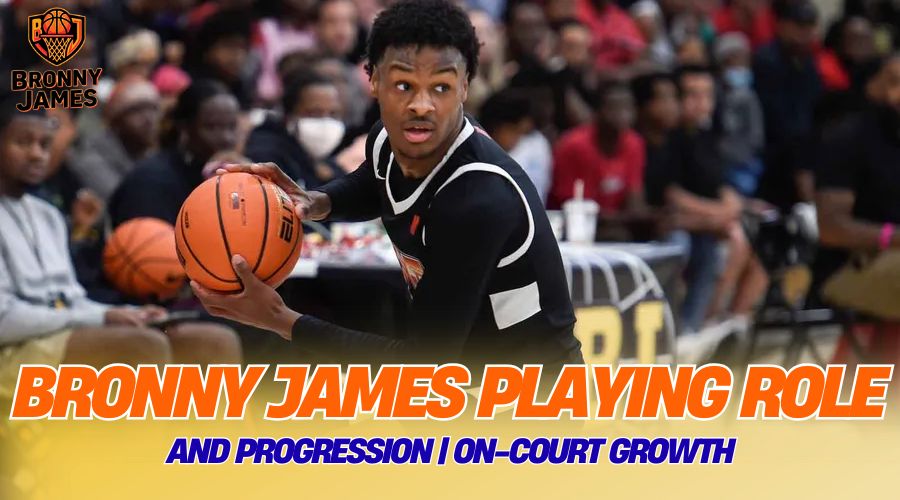
Bronny James playing role and progression have been shaped by context rather than convenience. Unlike players whose early development centers on scoring dominance, Bronny’s growth reflects a role-based approach—one that emphasizes adaptability, defensive responsibility, and understanding team structure. His progression offers insight into how modern basketball careers are increasingly built through fit and reliability rather than immediate stardom.
This article examines Bronny James playing role and progression across different stages, highlighting how his responsibilities have evolved and why his long-term value lies in functional contribution rather than individual usage.
Understanding Bronny James’ Early Playing Role
Before examining progression, it is essential to understand how Bronny James’ early playing role was defined. From the beginning, his responsibilities were shaped by team context rather than individual branding.
This foundation influenced how his game evolved over time.
A Role Defined by Team Needs, Not Spotlight
In youth and early competitive settings, Bronny was rarely positioned as a primary scoring option. Instead, his role emphasized ball movement, spacing, and defensive effort. Coaches valued his willingness to support systems rather than disrupt them.
This approach reduced statistical visibility but reinforced habits essential for long-term development.
Learning to Impact Games Without High Usage
Bronny’s early playing role taught him how to affect outcomes without dominating the ball. Defensive stops, timely passes, and positional discipline became his primary tools.
These contributions often escape casual evaluation but are central to role players who sustain careers at higher levels.
Role Evolution Through High School Competition
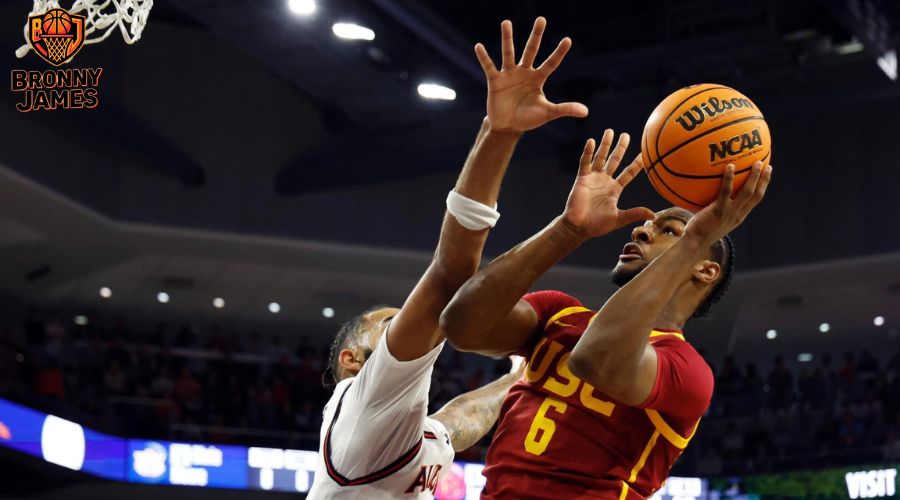
As Bronny advanced into elite high school environments, his playing role became more clearly defined. Competing alongside other high-level prospects required acceptance and execution within narrow margins.
This phase marked a critical step in his progression.
Adapting to Structured, Talent-Rich Lineups
At programs like Sierra Canyon, Bronny played within lineups featuring multiple scoring options. His role focused on defensive assignments, secondary playmaking, and maintaining offensive flow.
Rather than competing for attention, he adapted to complement teammates—an ability that scouts consistently value.
Expanding Responsibility Without Changing Identity
While his responsibilities increased, Bronny’s identity remained consistent. He became more comfortable initiating sets and defending top perimeter players, but he did not abandon his team-first approach.
This balance allowed progression without identity disruption.
Transitioning Playing Role at the College Level
College basketball represents a major shift in competition and expectation. For Bronny James, this transition required redefining his playing role within a more physical and tactical environment.
Rather than expanding immediately, his role narrowed before evolving again.
Earning Trust Through Defensive Reliability
At the college level, Bronny’s playing time was tied closely to defensive performance. Coaches prioritized his ability to execute assignments, communicate within schemes, and maintain composure.
This trust-based role reinforced the idea that reliability precedes freedom in competitive systems.
Operating as a Connector Rather Than a Creator
Offensively, Bronny often functioned as a connector—linking primary scorers through ball movement, spacing, and timely decisions. This role limited shot volume but increased efficiency and cohesion.
Such roles are foundational in professional environments, even if they lack immediate visibility.

Progression in Responsibilities and Game Impact
Playing role progression is not always linear. For Bronny James, progression has meant incremental expansion rather than role replacement.
This pattern reflects a sustainable development model.
Gradual Increase in Decision-Making Responsibility
As Bronny gained experience, coaches entrusted him with greater decision-making—initiating actions, reading defensive coverage, and managing pace.
These responsibilities signal progression even when usage remains moderate.
Balancing Assertiveness With System Discipline
One ongoing developmental focus is assertiveness within defined roles. Progression involves recognizing when to maintain flow and when to attack advantage.
Bronny’s growth in this area reflects maturation rather than deviation from identity.
Defensive Role as the Anchor of Progression
Defense remains the most stable element of Bronny James playing role. While offensive responsibilities evolve, his defensive role provides continuity.
This consistency anchors his progression across levels.
Primary and Secondary Defensive Assignments
Bronny’s role often includes guarding primary or secondary ball handlers. His footwork, anticipation, and discipline allow him to contain without fouling.
These skills translate well across competitive tiers.
Team Defense and Communication Growth
Beyond individual matchups, Bronny’s progression includes improved communication and rotational awareness. These elements often determine trust at higher levels.
Such growth reinforces his value within structured defensive systems.
Role-Based Progression Versus Public Expectations
Public expectations often equate progression with scoring increases. Bronny James playing role progression challenges this assumption.
Understanding the distinction between visibility and value is essential.
Why His Progression Appears Subtle
Because Bronny’s roles prioritize function over flair, progression can appear understated. However, within team contexts, expanded responsibility signals trust and growth.
This disconnect explains much of the public misinterpretation surrounding his development.
The Professional Value of Role Stability
Stable role progression supports longevity. Players who understand and execute defined roles consistently often sustain careers longer than high-usage counterparts.
Bronny’s progression aligns with this professional reality.
Projecting Bronny James playing role at the Professional Level
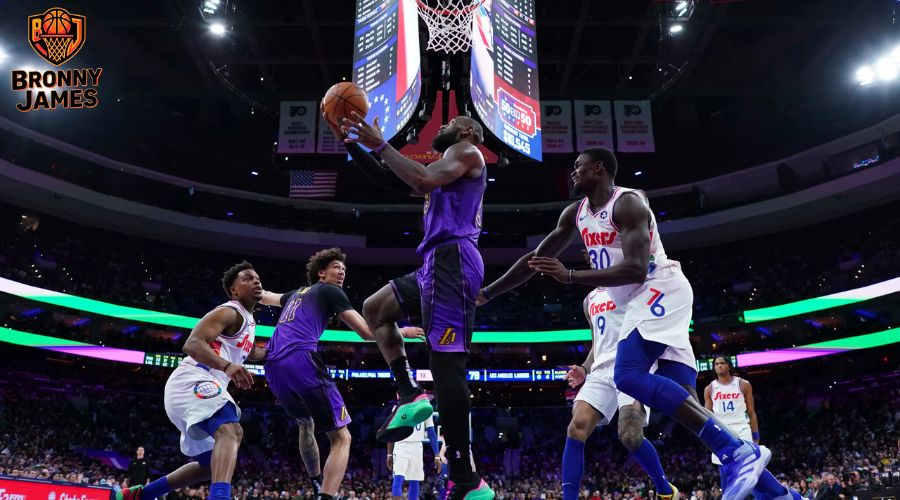
As Bronny James’ career advances, his playing role is likely to continue evolving within structured frameworks rather than through abrupt transformation.
This projection reflects how modern teams build depth and reliability.
Potential Professional Role Archetypes
Evaluators often project Bronny as a defensive-minded guard capable of contributing within rotation systems. His ability to connect lineups and maintain defensive integrity supports this view.
Such roles are essential to competitive teams, even if they lack headline appeal.
Progression Through Trust and Opportunity
Future progression will depend on continued defensive reliability, increased offensive assertiveness, and adaptability. Trust earned through execution will dictate role expansion.
This pathway mirrors that of many long-term contributors.
How Playing Role and Progression Define Bronny James’ Trajectory
Bronny James playing role and progression reveal a career built on patience, discipline, and understanding system demands. Rather than chasing dominance, his development emphasizes contribution.
This approach aligns with the realities of modern basketball.
Conclusion: Progression Through Purpose, Not Pressure
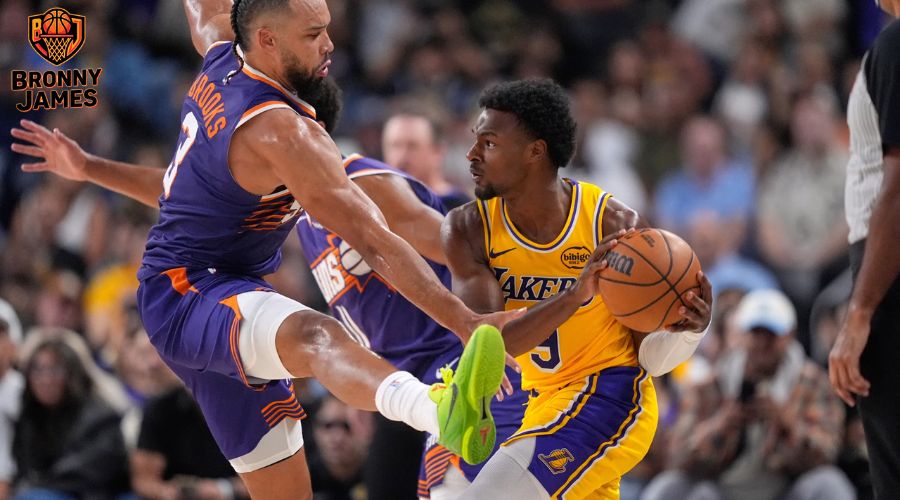
Bronny James playing role and progression illustrate a deliberate path shaped by role acceptance and incremental responsibility. His growth reflects intention rather than urgency, adaptability rather than resistance.
While his progression may not always be immediately visible, it is structurally sound. In a landscape where many careers rise quickly and fade, Bronny’s role-based development offers a model built for sustainability.
This evolution fits into a larger competitive timeline explored in our Career section.
